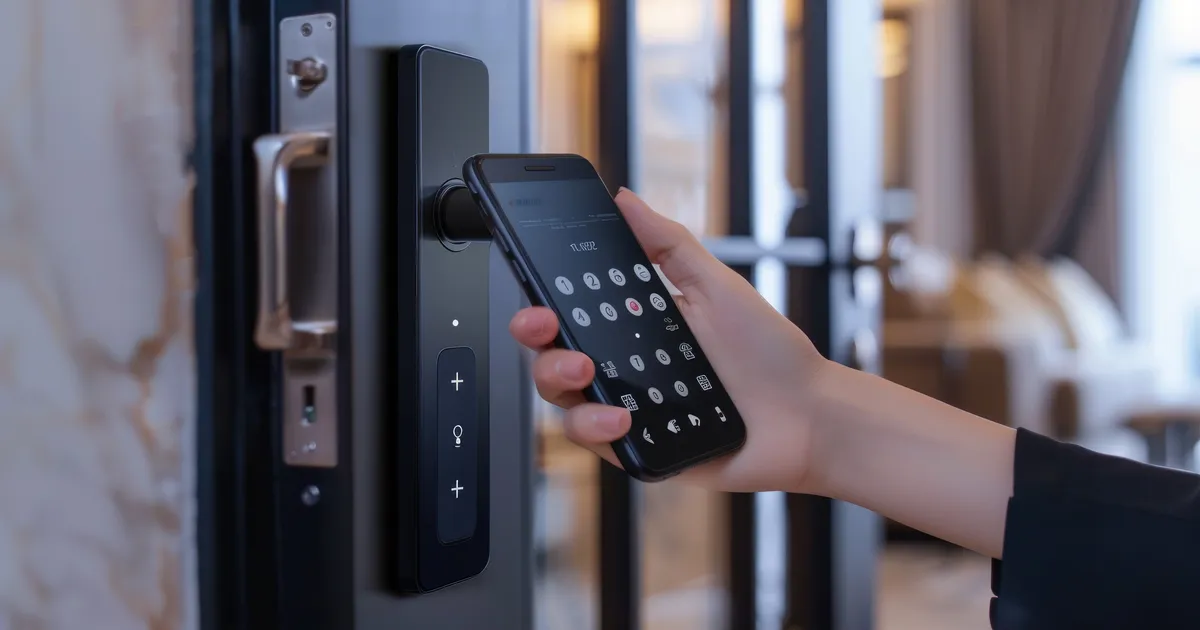
Short answer: a traditional deadbolt is simpler, cheaper, and has no batteries or software to maintain — it just works. A smart lock adds keyless entry, temporary or scheduled access codes, remote lock/unlock, and an entry log, at the cost of batteries to manage and a setup that benefits from being done correctly. The real question isn’t “which is more secure” so much as “do you need the access-management features a deadbolt can’t offer.”
What doesn’t actually change
Security-wise, a smart lock isn’t automatically stronger or weaker than a good traditional deadbolt. Many smart locks use the same ANSI-graded lock hardware as their traditional counterparts, or retrofit motorized control onto a standard deadbolt. If physical break-in resistance is your main concern, lock grade matters more than “smart” vs. “traditional.”
What a smart lock actually adds
- No more physical keys to copy, lose, or re-key. Access is managed through codes or app permissions instead.
- Temporary and scheduled access. Give a cleaner, contractor, or guest a code that only works for a specific window, without handing out a real key.
- An entry log. See when the door was unlocked and by which code — useful for peace of mind, not just security incidents.
- Remote lock/unlock, useful for letting someone in, or double-checking you locked up, without being home.
- Integration with other smart-home routines — locking automatically when an alarm arms, or as part of a “leaving home” scene.
What’s a genuine tradeoff, not a downside to hide
- Batteries need occasional replacement. Not a big deal with a reminder system in place, but it’s real maintenance a traditional deadbolt doesn’t have.
- Setup quality matters more. A poorly configured smart lock (weak Wi-Fi at the door, default codes never changed, app notifications ignored) can undercut its own benefits. A traditional deadbolt has no configuration to get wrong.
- More moving parts. Motor, batteries, connectivity — more components than a purely mechanical lock, even with backup options built in.
How to decide
A traditional deadbolt is a fine, complete answer if you don’t need to manage access for other people and just want a reliable lock. A smart lock is worth it if any of these are true for your household:
- You regularly give access to a cleaner, dog walker, contractor, or guest and don’t want to hand out keys
- You want to know when the door was actually locked, not just assume it
- The door is part of a broader smart-home or security setup you’re already building
- You’ve dealt with lost or unreturned keys before and want to stop re-keying
Getting it installed right
The features above only hold up if the lock is installed and configured correctly — proper door alignment so the deadbolt isn’t straining the motor, a strong-enough Wi-Fi signal at the door for remote features, and codes actually set up and shared securely rather than left on defaults.
See our smart home page for how we handle smart lock installation and setup, or request a free assessment if you’re deciding between a few models.