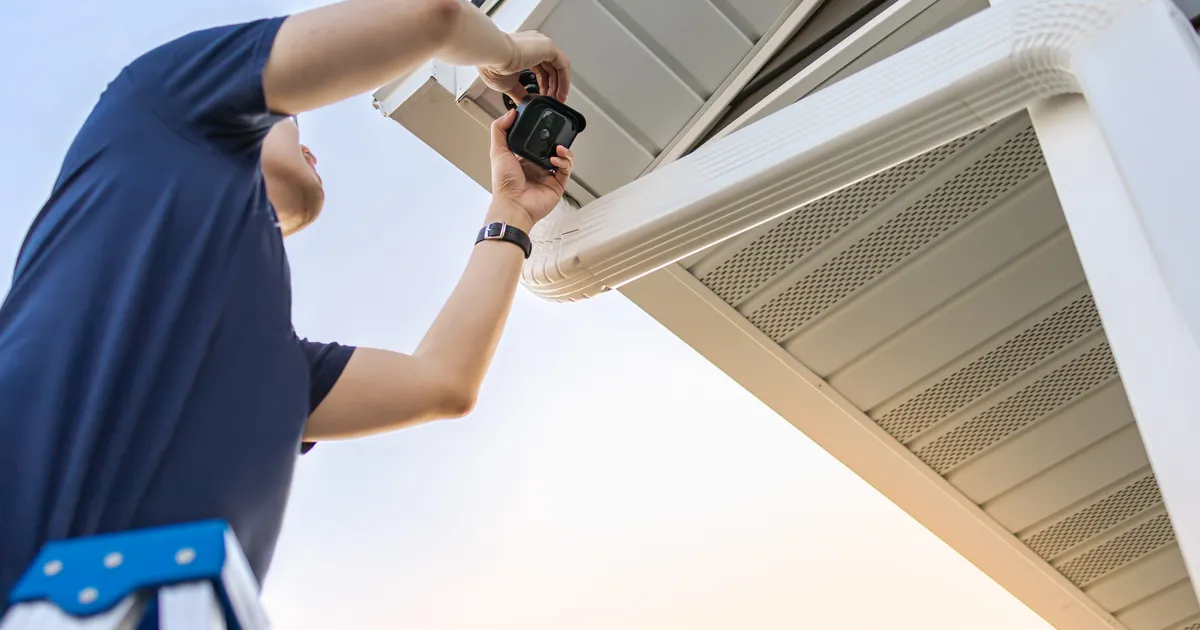
Short answer: DIY security cameras are a reasonable choice for a single doorbell camera or a small, simple setup where Wi-Fi coverage is already solid. Professional installation is worth it when you need reliable coverage across multiple cameras, wired power or PoE runs, correct placement for angles that actually matter (faces, plates, entry points), and footage you can count on if something happens. The gap between the two is rarely the camera itself — it’s placement, wiring, and network reliability.
What DIY installation usually gets right
Consumer camera kits have gotten genuinely good, and DIY makes sense for:
- A single video doorbell or one or two battery-powered cameras
- Homes where Wi-Fi already reaches every planned camera location reliably
- Renters or short-term situations where permanent wiring isn’t practical
- Straightforward monitoring needs — seeing who’s at the door, casual driveway visibility
Where DIY setups typically fall short
The problems with DIY installs rarely show up on day one — they show up the day you actually need the footage:
- Placement that looks fine, but isn’t functional. A camera angled to capture “the driveway” in general, rather than the specific approach path or license plates, often doesn’t hold up when you need a usable detail.
- Battery cameras that miss moments. Motion-triggered battery cameras have a wake-up delay; fast events (a car passing, a quick doorstep grab) can be missed or captured a beat late.
- Wi-Fi dependency. If every camera relies on Wi-Fi and the network has a weak spot, that’s exactly where coverage tends to fail — often the same dead zones causing other connectivity problems in the home.
- No real recording strategy. Cloud storage on a free tier often means limited history or lower resolution; local storage without redundancy can be lost with a single SD card failure.
- Gaps between cameras. Multiple cameras bought and mounted independently, without planning overlapping fields of view, commonly leave blind spots at property lines or side entries.
When professional installation is worth it
A professional install earns its cost in a few specific situations:
- Multiple cameras that need to work as one system — consistent angles, overlapping coverage, and a single app instead of several
- Wired power or PoE (Power over Ethernet) for cameras that need to run continuously without battery limits or Wi-Fi dependency
- Reliable storage — a plan for footage retention that doesn’t depend on one memory card or a single cloud tier
- Access control integration, if cameras need to work alongside door locks or entry systems
- Larger or commercial properties where blind spots have real liability implications, not just inconvenience
A reasonable way to decide
If your goal is “see who’s at the door,” DIY is usually enough. If your goal is “have footage I can actually use if something happens” across more than a camera or two, professional placement and wiring make the difference between a system that looks complete and one that actually performs when it matters.
See our security page for what a professional camera and access-control installation includes, or request a free assessment — we’re glad to look at an existing DIY setup and tell you honestly whether it needs more than we’d recommend.